
Exit

Author Archives: Kathy Stillman

  1. When Precision Demands More: Try Photo Etching

    Comments Off on When Precision Demands More: Try Photo Etching

    When working with precision metal components, many learn that no single fabrication process fits every challenge.

    When tolerances are tight, features are fine, and materials are thin or complex shapes, traditional methods like stamping, punching, or laser and EDM cutting can introduce limitations—mechanical stress, heat distortion, or tooling costs among them. That’s where Photo Chemical Machining (PCM) stands apart.

    Here are six times to consider Photo Etching (PCM by another name):

    1. When the Design Features Are Extremely Fine or Complex

    PCM is a photolithographic process capable of producing intricate profiles, micro features, and complex geometries that would be difficult or impossible to machine or stamp.
    • No mechanical stress: There’s no contact with cutting tools or dies.
    • True-to-design accuracy: Etched features replicate the CAD image exactly, ideal for fine meshes, filters, and precision spring elements.
    • Consistent edge definition: Even on complex or compound shapes.
    Typical features can be as fine as 0.1 mm (0.004 in), with tolerances down to ±0.38 mm depending on thickness.

    2. When Material Integrity Must Be Preserved
    Laser, plasma, and EDM cutting introduce heat-affected zones (HAZ), which can alter metallurgical properties, cause edge hardening, or induce microcracks—issues that are especially critical in aerospace alloys, battery foils, or precision electronic components.
    PCM is a cold process, removing metal chemically rather than thermally. The result:
    • No burrs or recast layers.
    • No stress, deformation, or surface hardening.
    • Uniform material properties across every part.

    3. When Prototyping or Design Iteration Is Frequent
    Because PCM uses photo tooling instead of hard dies, design changes are quick and inexpensive to implement. New patterns can be generated digitally and applied without investing in costly stamping tools or EDM fixturing.
    • Perfect for rapid prototyping or short runs.
    • Seamless transition to full production without retooling delays.
    This flexibility makes PCM especially valuable for R&D programs and for industries under constant innovation pressure—electronics, medical devices, and fuel cell technologies among them.

    4. When Production Volumes Are Moderate to High, but Tooling Budgets Are Tight
    Unlike stamping or punching, PCM requires no expensive, wear-prone dies. Phototools are and inexpensive to reproduce or modify, generally less than $500.
    This not only reduces upfront cost but also eliminates tool wear variables that affect dimensional consistency over long runs.
    5. When Edge Quality and Burr-Free Surfaces Matter

    Mechanical or thermal cutting processes often require secondary finishing to remove burrs, slag, or taper.
    PCM produces parts that are flat, burr-free, and ready for assembly or plating straight from the etching line. This is particularly beneficial in multi-layer laminations, fine filters, and components where post-processing could distort thin materials.

    6. When Working with Thin or Delicate Metals

    Photo chemical machining excels in thin gauge metals (typically 0.001–0.080 inch thick). Stamping or punching thin foils risks distortion or tearing, while lasers can warp small parts through heat input.
    PCM maintains flatness and feature fidelity even in materials like stainless steel, copper, nickel and specialty alloys.

    In Summary
    If your part design demands:
    • Intricate detail
    • No burrs or heat distortion
    • Economical prototyping and fast design iteration
    • Consistent quality across high volumes
    …then Photo Chemical Machining may be the most efficient and precise solution available.
    By integrating PCM early in the design phase, engineers can unlock geometries and tolerances that conventional processes simply can’t match—without sacrificing time, cost, or material performance.

    CONARD’s Free Ebook Design Guide can be Downloaded here:

    Comprehensive Guide to Photochemical Machining

    "*" indicates required fields

    This field is for validation purposes and should be left unchanged.


  2. PCM and SPC: Why Never the Twain Shall Meet

    Comments Off on PCM and SPC: Why Never the Twain Shall Meet

    Lies, Da–ed Lies, and Statistics (attributed to Mark Twain)

    In precision manufacturing, process capability indices such as Cpk are widely used to quantify a process’s ability to produce parts within specified tolerance limits. A Cpk of 1.33 or greater is often considered the benchmark for a capable and statistically controlled process. However, photo chemical machining (PCM)—while unmatched for producing intricate, burr-free metal components—does not conform neatly to the same statistical models that define conventional, mechanically driven manufacturing processes. The reason lies in the very nature of PCM as a chemical and photolithographic process, where dimensional outcomes are influenced by multiple variables that cannot be reduced to consistent mechanical relationships.

    The Nature of PCM and Its Process Variables

    Photo chemical machining removes metal by chemical dissolution through patterned photoresist masks. Each step—cleaning, coating, imaging, developing, etching, and stripping—introduces variations that stem from chemical kinetics, fluid dynamics, and photoresist behavior rather than from mechanical repeatability. While these steps are highly controlled, their outputs inherently exhibit non-linear variability.

    Key sources of variation include:

    • Etchant composition and temperature: Small fluctuations in chemical concentration, temperature, and flow rate alter the metal removal rate. Even under careful control, these parameters drift over time due to etchant depletion and reaction byproducts.
    • Photoresist coating thickness and exposure: Variations in resist thickness or UV exposure energy affect pattern fidelity, especially along fine features and sharp corners.
    • Undercut geometry: Because etching attacks both vertically and laterally, the final feature size is affected by etch depth and time in a non-linear way that depends on alloy composition, sheet thickness, and feature density.

    These are systemic chemical variations, not random or assignable mechanical errors. Therefore, the output distribution for etched dimensions is rarely normal (bell-shaped), a fundamental assumption behind statistical process control metrics such as Cpk.

    Cpk Assumes Mechanical Repeatability

    In machining, stamping, or molding, dimensional variation follows predictable physical laws—tool wear, press stroke consistency, thermal expansion, or machine alignment. Once the sources of variation are minimized and stable, the process can be characterized statistically with high confidence.

    A Cpk of 1.33 means that the process variation (6σ spread) comfortably fits within the specification limits with a central mean. In other words, both the distribution and its stability are measurable and repeatable.

    In PCM, however, the distribution of results from etching is not normally distributed and not constant over time. The process behaves more like controlled corrosion than mechanical removal. While etch rate can be closely monitored, small environmental or material variations can shift feature sizes by several microns in unpredictable directions. That makes it impossible to apply the same statistical confidence intervals as one would with cutting tools or stamping dies.

    Dimensional Control Without Cpk

    Despite its inability to demonstrate a Cpk of 1.33, PCM consistently meets demanding dimensional tolerances—often in the range of +/-10% of material thickness or better—by using process modeling, empirical calibration, and in-process measurement. Manufacturers routinely measure test coupons or witness samples on every panel to monitor etch rate and adjust dwell time dynamically.

    Instead of relying on statistical control charts, PCM achieves precision through feedback control and process compensation. For example, artwork dimensions are adjusted (“compensated”) to offset expected undercut or over-etch, ensuring that final part geometries meet design intent even if the chemical variation is not statistically stable.

    This approach is deterministic rather than statistical. The process may not achieve a Cpk of 1.33, but it consistently produces parts within tolerance by design.

    Conclusion

    Photo chemical machining defies the conventional assumptions that make statistical process control meaningful. Its core variables—chemical concentration, temperature, photoresist behavior, and etch kinetics—introduce complex, non-normal variation that cannot be stabilized to the degree required for a Cpk of 1.33.

    However, this does not reflect a lack of precision or quality. Instead, it highlights that PCM is governed by chemical control rather than mechanical predictability. Manufacturers ensure precision through real-time monitoring, empirical correction, and deep process expertise—not through statistical metrics designed for mechanically repeatable systems.

    In short, PCM is a capable process, but not a statistically capable process in the SPC sense. Its precision arises from science and control, not statistics and normality.

    For More Information

    Contact Page Form

    "*" indicates required fields

    This field is for validation purposes and should be left unchanged.
    Max. file size: 8 MB.
    This field is hidden when viewing the form

  3. PCM and DPG– Distributed Power Generation: Made for Each Other

    Comments Off on PCM and DPG– Distributed Power Generation: Made for Each Other

    Distributed power generation (DPG) has become a central pillar of modern energy strategy, driven by the need for efficiency, resiliency, and the integration of low-carbon technologies. Instead of relying solely on large, centralized plants, distributed systems leverage smaller units such as fuel cells, microturbines, solar arrays, wind and advanced nuclear technologies like pressurized water reactors (PWRs) designed for modular or microgrid deployment. Within this evolving landscape, photo chemical machining (PCM) plays an important role by enabling the precise fabrication of critical metal components that directly impact efficiency, safety, and reliability.

    Why PCM Matters in Distributed Power Systems

    DPG technologies demand components that are both highly precise and optimized for thermal and fluid performance. Unlike conventional power plants, distributed units often operate at smaller scales, where every increment of efficiency translates into meaningful gains. At the same time, these technologies must balance compactness with durability under extreme operating conditions, such as high pressure, high temperature, or corrosive environments.

    PCM, sometimes called photo etching or photochemical etching, is uniquely suited to this challenge. It allows engineers to manufacture intricate patterns in thin metal foils and sheets without mechanical stress or heat distortion. Because the process uses a photoresist mask and chemical etchants, it can create highly detailed geometries with tolerances in the range of ±50–100 microns. This precision enables designers to develop complex flow channels, fine filters, and lightweight heat transfer structures that would be difficult or prohibitively expensive to achieve with stamping, laser cutting, or wire EDM.

    Applications in Fuel Cells and Microturbines

    Fuel cells, a cornerstone of distributed energy systems, rely on repeating units of bipolar plates or proton exchange membrane (PEM) elements. PCM enables the manufacture of these plates with intricate micro-channel patterns for optimized gas flow, water management, and thermal regulation. Since the process leaves no burrs or recast layers, the risk of short circuits or localized stress points is eliminated, directly improving stack reliability.

    Microturbines, which generate power from gaseous or liquid fuels, also benefit from PCM in the production of filtration screens, precision orifices, and flow restrictors. These components govern the efficient mixing of air and fuel, protect turbine blades from particulates, and help optimize combustion. PCM’s capability for producing thousands of identical parts at scale further aligns with the economic requirements of distributed power adoption.

    Pressurized Water Reactors in Distributed Power

    Perhaps the most exciting development in distributed power is the emergence of small modular reactors (SMRs), particularly those based on pressurized water reactor technology. Traditional PWRs are the backbone of large-scale nuclear generation, but SMRs adapt this proven design into smaller, factory-fabricated modules suitable for distributed deployment. Here again, PCM plays a critical role.

    In SMRs and advanced PWRs, thermal efficiency depends on highly controlled coolant flow, effective heat transfer surfaces, and robust filtration of particulates or corrosion products. PCM can produce finely tuned flow plates, micro-channel heat exchangers, and support grids for reactor internals that meet the tight tolerances demanded by nuclear applications. Because the process avoids mechanical stress, the integrity of specialty alloys such as Inconel or stainless steels—commonly used in nuclear systems—is preserved. This ensures long-term resistance to radiation, pressure, and chemical attack.

    Moreover, nuclear safety places a premium on component uniformity and reliability. PCM’s repeatability supports the production of critical safety-related parts without variability that could compromise performance. For modular PWRs, where standardization and scalability are essential to economic deployment, PCM provides a manufacturing pathway aligned with industry goals.

    Enabling Innovation and Integration

    Beyond specific technologies, PCM supports innovation across distributed power generation by freeing engineers from many of the geometric limitations imposed by subtractive machining or forming. Designers can iterate more quickly, experiment with new flow-field architectures, or integrate multifunctional features into a single etched plate. This design flexibility accelerates the development of more compact, efficient, and durable distributed power units.

    Conclusion

    Distributed power generation technologies are reshaping how energy is produced and consumed. From fuel cells and microturbines to modular pressurized water reactors, success depends on components that combine precision, durability, and efficiency. Photo chemical machining provides the capability to manufacture such parts at scale while preserving material integrity and enabling innovative designs. Its role is not merely supportive but foundational, helping to ensure that the next generation of distributed energy systems meets the demands of performance, safety, and sustainability.

    For More Information on Photo Chemical Machining

    Contact

    "*" indicates required fields

    This field is for validation purposes and should be left unchanged.
    Name*
    Please let us know what's on your mind. Have a question for us? Ask away.

  4. How PCM Helps Designers and Engineers Meet Technology-driven Design Goals

    Comments Off on How PCM Helps Designers and Engineers Meet Technology-driven Design Goals

    Technology driven design

    We talk to dozens of engineers and designers who are looking for new ways to solve their most challenging design efforts. Sometimes, the parts they want to make are too complex for the processes they’re accustomed to using. Other times, they need parts in batch sizes that are impractical for other fabrication methods: perhaps too few for stamping or too many for laser.

    Photo chemical machining has characteristics that make it an effective option for some of these problems. Here are four benefits that engineers and designers should know about:

    “At its hottest point, the etching process reaches temperatures of about 125℉. “

    No stresses or deformations on the finished part

    The cutting- and stamping-based fabrication methods are more well-known, but they have some shortcomings that give designers pause. For example, laser cutting and wire EDM exposes the workpiece to extremely high temperatures, leading to heat affected zones or recast layers that can change the characteristics of the metal alloy.  Stamping and punching can create work hardening that requires remediation through annealing. Stamping and CNC milling can lead to mechanical distortions, burrs and uneven edges.

    Photo etching has none of these problems. At its hottest point, the etching process reaches temperatures of about 125℉. And because the parts are chemically etched out of the sheet metal, there are no cutting or shearing actions that lead to burrs or other deformations.

    Well-suited for complex geometries and features on flat parts

    Today, screens, meshes, sieves and other parts that require many small holes or design features are finding their place in industrial, medical, electronic and scientific applications. For most of the conventional fabrication processes, these parts are either nearly impossible to make, or are completely impractical in terms of tooling, cycle time or costs.

    A phototool is a stencil used to imprint the pattern of the parts on the metal. All of the features, including as many holes as may be needed, are etch all at once at no additional cost. This saves time and ensures the uniformity of each hole on the part. The photo etching process produces consistent, burr-free holes as small as 0.004″ in 0.002″ thick material. As a rule, minimum hole size is 110 percent of the thickness of the material. On 0.010″ thick material, the smallest hole we could make would be 0.011″.

    Designers and engineers today need precise component parts and are looking for new processes that help them solve design problems.

    Tight, consistent tolerances are built in

    The phototool is extremely accurate because light is its only working exposure. Thus, there is there is no “tool wear” that could lead to tolerance variations. Because of this, the locational tolerances for design features generally meet the nominal dimensions of the specification.

    Dimensional tolerances are dictated by the thickness of the metal. We can typically hold these to within +/-15% of the sheet’s thickness.

    Design changes are quick and easy

    Phototools are inexpensive, generally about $400 and can be made in about 2 days. This means that designers can change their designs without incurring substantial costs or delays.

    For detailed information, our newly updated Comprehensive Guide to Photo Chemical Machining offers engineers and designers technical information to assist their projects:


    Check out the “Minutes with Max” video series.  All about etching in bite-size chunks.

    Got a Question?

    Contact Page Form

    "*" indicates required fields

    This field is for validation purposes and should be left unchanged.
    Max. file size: 8 MB.
    This field is hidden when viewing the form

  5. Comparing Metal Fabricating Options

    Comments Off on Comparing Metal Fabricating Options

    Options for Fabricating Precision Metal Components


    Modern solid modeling systems offer very direct paths for outputting data files for laser cutting (and its cousins: water jet and plasma), Wire EDM and even die design for both progressive and single strike die-stamping.  But for sheet metal fabricating’s “best-kept secret,” CAD consideration for photo chemical machining (PCM) is an afterthought.

    PCM, though, offers capabilities and advantages over other processes, if only more engineers and designers knew about them:

    • Processing very thin foils down to .001, even in dead soft aluminum.
    • Metal filtration, grids, screens, apertures (lots of holes), with openings as small as .005”
    • No mechanical or thermal deformations, such as cold working, burrs, heat affected zones or recast layers.

    Here is more information on these fabrication choices:

    1. Stamping

    Overview:

    Stamping is a high-speed process that uses mechanical or hydraulic presses and custom-designed dies to shape or cut sheet metal. It encompasses a variety of techniques including blanking, punching, bending, embossing, and coining.

    Suitable Materials:

    • Steel (carbon, stainless)
    • Aluminum
    • Brass
    • Copper
    • Titanium
    • Specialty alloys

    Process Characteristics:

    • Tooling: Requires hardened steel dies and punches
    • Speed: Very high—ideal for mass production
    • Precision: ±0.01 mm or better with proper tooling
    • Thickness Range: Typically 0.005″ to 0.250″ (0.13 mm to 6.35 mm), depending on material and part size
    • Minimum Feature Size: Limited by die capabilities; sharp internal corners may be difficult
    • Setup Time: High (due to die design and testing)
    • Lead Time: Weeks for tooling; fast production once set up

    Advantages:

    • Exceptional production speed and cost-effectiveness at high volumes
    • Consistent quality and repeatability
    • Capable of complex 3D forms through progressive dies
    • Long tool life with proper maintenance

    Limitations:

    • High initial tooling cost and long lead time
    • Not economical for small batches or prototyping
    • Design changes require costly die modifications
    • Burrs and deformation may occur in thin or soft metals

    Best Applications:

    • Automotive components
    • Connectors and terminals
    • Electronic enclosures
    • Battery contacts
    • High-volume appliance parts
    1. Laser Cutting

    Overview:

    Laser cutting uses a focused laser beam to melt, burn, or vaporize material along a programmed path. CNC systems control the movement of the laser head and material.

    Suitable Materials:

    • Most metals, including steel, aluminum, copper, brass, and titanium
    • Reflective materials require special lasers (e.g., fiber lasers)

    Process Characteristics:

    • Tooling: No physical tooling; requires digital CAD files
    • Speed: Moderate to high (depends on material thickness and complexity)
    • Precision: ±0.025 mm or better
    • Thickness Range: Typically up to 20 mm for steel; thinner foils also supported
    • Minimum Feature Size: ~0.1 mm, depending on laser beam width
    • Setup Time: Very low
    • Lead Time: Short—ideal for prototypes and low to medium volumes

    Advantages:

    • Excellent precision and edge quality
    • High flexibility—easy to modify designs
    • Minimal physical contact reduces distortion
    • No tooling costs—ideal for prototypes or frequent design changes

    Limitations:

    • Heat-affected zones (HAZ) may cause microstructural changes or warping
    • Not ideal for very thick metals or parts requiring tight tolerances over long runs
    • Slower than stamping for large production volumes
    • May leave oxide layers or require post-processing

    Best Applications:

    • Prototypes and short-run components
    • Decorative or complex cutouts
    • Medical device parts
    • Aerospace brackets
    • Custom enclosures
    1. Photo Chemical Machining (PCM)

    Overview:

    Photo chemical machining (also called photo etching or chemical machining) involves coating the metal with a photoresist, exposing it to a patterned UV light source, and etching away exposed areas using acid solutions. This process is especially suited for thin metal parts requiring intricate detail.

    Suitable Materials:

    • Stainless steel
    • Carbon and silicon steels
    • Nickel and many nickel alloys
    • Copper and copper alloys
    • Aluminum
    • Beryllium copper
    • Molybdenum
    • Silver
    • Aluminum and Nickel Braze foils
    • Metal-Clad substrates for flex circuits, resistive heating elements and direct-bond copper

    Check out more options here.

    Process Characteristics:

    • Tooling: Photomasks produced from CAD designs, generally less than $500
    • Speed: Moderate (includes chemical processing time)
    • Precision: ±0.04mm (or better with optimized parameters)
    • Thickness Range: 0.0005″ to 0.060″ (0.013 mm to 1.5 mm)
    • Minimum Feature Size: ~0.06 mm; aspect ratio dependent
    • Setup Time: Moderate (requires photo tooling and chemical baths)
    • Lead Time: ~4 weeks typical

    Advantages:

    • No mechanical or thermal stress on material—ideal for delicate foils
    • Extremely fine detail possible; excellent for micro-scale geometries
    • Burr-free parts with smooth edges
    • Can process multiple parts simultaneously from large sheets

    Limitations:

    • Steel and Nickel alloys up to .040”; copper alloys up to .065” and aluminum up to.080”
    • Titanium and a number of “super alloys” that are very corrosion resistant may require the use of hydrofluoric etching solution.
    • Even with all aqueous chemistries and on-site water treatment, spent solutions and resist are considered hazardous waste and must be handled per regulations.
    • Equipment capacity generally defines maximum sheet sizes, rarely larger than 30” x 60.”

    Best Applications:

    • EMI/RFI shielding
    • Bus bars
    • Lead frames
    • Encoders and precision apertures
    • Fuel cell plates
    • Medical screens and mesh components
    • Battery Components
    • Heat Exchangers
    • Cold Plates
    • Braze Foils
    • Metal Filtration Elements
    • Hermetic lids, flat and stepped
    • Metal shims, gaskets, retainers and seals
    • Flat springs and flexures
    • Scientific and industrial instruments and tools
    1. Wire EDM (Electrical Discharge Machining)

    Overview:

    Wire EDM is a non-contact machining process that uses a continuously fed thin wire and electrical discharges (sparks) to cut conductive metals submerged in dielectric fluid.

    Suitable Materials:

    • Any electrically conductive metal: tool steel, titanium, aluminum, Inconel, tungsten, etc.

    Process Characteristics:

    • Tooling: Requires CAD/CAM programming, but no physical dies
    • Speed: Slow (especially on thick or complex geometries)
    • Precision: Exceptional—±0.002 mm or better
    • Thickness Range: 0.1 mm up to 300 mm+
    • Minimum Feature Size: Wire diameter limited (~0.02–0.3 mm); internal corners have small radii
    • Setup Time: Low to moderate
    • Lead Time: Moderate; often longer than laser/PCM for same part

    Advantages:

    • Capable of extremely tight tolerances and fine finishes
    • Excellent for hard or exotic materials
    • No mechanical force—no warping or distortion
    • Capable of complex internal geometries

    Limitations:

    • Slow cutting speed—not economical for large batches
    • Limited to conductive materials
    • Wire path requires start hole (pre-drilling needed in some cases)
    • High energy consumption per part

    Best Applications:

    • Precision tooling and dies
    • Aerospace and medical implants
    • Microfluidic components
    • Fine gears and intricate mechanical parts
    • Prototyping high-tolerance conductive parts


    Selecting the Right Process

    Choosing the right process depends on several critical factors:

    1. Volume and Cost
    • Stamping is ideal for high-volume production due to its speed and low per-part cost after tooling.
    • Laser cutting and PCM offer more flexibility and lower setup costs, better suited for small to medium batches or frequent design iterations.
    • Wire EDM is best reserved for small-batch, high-precision work due to slower cycle times and higher per-part costs.
    1. Part Complexity and Precision
    • For intricate, burr-free, and stress-free parts from thin foils, PCM excels.
    • When tight tolerances and internal features are critical, wire EDM is unmatched.
    • Laser cutting handles most 2D geometries with good accuracy, while stamping shines in complex 3D forming through progressive dies.
    1. Material Considerations
    • Wire EDM works on any conductive metal, regardless of hardness.
    • Few PCM facilities use HF etching chemistry. Most alloys etch well in Fe3Cl.
    • Laser cutting and stamping accommodate a wide range of alloys.
    1. Time-to-Market and Prototyping
    • Laser cutting and PCM offer the shortest lead times with minimal tooling, making them ideal for prototypes.
    • Stamping is less suitable for early design validation due to tooling investment.
    • Wire EDM, while slower, is useful for prototype-quality parts needing extreme precision.

    Conclusion

    Each of the four fabrication processes—stamping, laser cutting, photo chemical machining, and wire EDM—has its strengths and ideal applications. The choice between them should be guided by a careful balance of design complexity, tolerance requirements, material selection, volume needs, and budget.

    • Use stamping for high-speed, high-volume production where initial tooling investment can be amortized.
    • Choose laser cutting for flexible, quick-turn manufacturing with moderate tolerances.
    • Opt for PCM when producing thin, intricate, burr-free components with tight tolerances.
    • Rely on wire EDM for low-volume, highly complex parts that require exceptional precision and finish.

    Selecting the right process can dramatically affect the efficiency, cost, and quality of your final product—making this decision a cornerstone of successful component manufacturing.

    For more Information:

    Contact Page Form

    "*" indicates required fields

    This field is for validation purposes and should be left unchanged.
    Max. file size: 8 MB.
    This field is hidden when viewing the form


  6. 6 Advantages of Photo Chemical Machining for Metal Filtration Devices

    Comments Off on 6 Advantages of Photo Chemical Machining for Metal Filtration Devices

    The Benefits of Photo Chemical Machining for Metal Filtration Devices

    a variety of photo etched metal parts
    Metal filtration devices play a crucial role in industries ranging from aerospace and automotive to medical, chemical processing, and energy production. These components often require intricate, high-precision perforations and complex geometries to meet functional and performance demands. For manufacturers and design engineers seeking both precision and production efficiency, photo chemical machining (PCM) presents a compelling fabrication method. PCM offers a range of benefits that make it especially well-suited to producing metal filtration devices, including design flexibility, tight tolerances, cost-effectiveness, and superior edge quality.


    1. Unmatched Design Flexibility

    One of the primary advantages of photo chemical machining for filtration components is its ability to create highly intricate and complex patterns in thin metal sheets without the constraints imposed by mechanical tooling. Filters often require thousands—or even millions—of uniform openings, some in custom or non-standard shapes, aligned precisely for fluid or gas flow control.

    PCM uses a photomask and chemical etchants to dissolve unwanted metal areas, allowing for:

    • Free-form geometries (slots, grids, hexagonal, elliptical, or irregular apertures)

    • Complex aperture patterns that would be difficult or impossible with stamping or drilling

    • Micro-scale features with consistent repeatability

    Because PCM is a mask-based process, design changes can be implemented quickly and inexpensively by simply modifying the phototool—without the need for costly retooling or mechanical adjustments. This is particularly beneficial during prototyping or low-to-medium volume production runs, where agility and customization are key.


    2. Tight Tolerances and Dimensional Accuracy

    High-performance filtration systems depend on predictable and uniform aperture sizes to ensure consistent flow rates, pressure drops, and separation performance. PCM is capable of achieving fine feature resolution—often in the range of ±0.025 mm (±0.001 inch) or better—while maintaining flatness and structural integrity of the metal.

    Unlike traditional punching or laser processes, PCM does not introduce mechanical or thermal stress to the material. There is no tool pressure, heat-affected zone, or deformation around the cut areas, which means:

    • Apertures maintain their shape and spacing precisely

    • Parts remain flat and free from burrs or warping

    • Thin metals as light as 0.0005 inches can be accurately machined

    Such precision is critical in medical, fuel cell, or aerospace applications where even slight deviations in pore size can affect system performance or safety.


    3. Burr-Free Edges and Superior Surface Quality

    Filtration components, especially those used in sensitive applications like fluid or gas purification, demand clean and smooth aperture edges to prevent particle retention, bacterial buildup, or flow disruption. Mechanical punching or laser cutting can leave burrs, sharp edges, or recast layers that compromise performance and require secondary finishing.

    In contrast, photo chemical machining is a non-contact, non-thermal process:

    • No mechanical burrs are formed

    • No edge deformation or micro-cracks

    • No heat-affected zone or metallurgical changes

    This results in high-quality surface finishes that meet or exceed industry standards without the need for secondary deburring or polishing operations, reducing overall processing time and cost.


    4. Material Versatility

    Photo chemical machining supports a wide range of metals used in filter applications, including stainless steel, nickel alloys, copper, brass, aluminum, and titanium. The process is especially well-suited to thin metals (typically from 0.0005 to 0.060 inches), and its chemical nature means that hard or exotic materials are no more difficult to machine than softer ones.

    This versatility enables PCM to support a diverse set of filtration solutions, including:

    • EMI/RFI shielding screens

    • Mesh or grid-type fuel injector filters

    • Blood filtration membranes

    • Chemical processing sieves and diffusers

    Additionally, multiple metals can be processed in parallel using similar tooling, which is useful for multi-material filter assemblies or hybrid system designs.


    5. Cost-Effectiveness for Prototyping and Production

    Unlike stamping or EDM, PCM does not require expensive hard tooling. The phototool—a film used to expose the metal—is inexpensive and fast to produce, often in a matter of hours. This makes photo chemical machining ideal for:

    • Rapid prototyping with production-quality results

    • Small-to-medium production runs

    • Low product development cost and faster iteration cycles

    Even in high-volume applications, PCM remains cost-competitive due to its ability to etch multiple parts per sheet simultaneously (nesting), and its reduced need for post-processing.


    6. Scalability and Repeatability

    Once a design is finalized, PCM offers excellent repeatability and scalability. Parts are consistently replicated with high precision and virtually no variation across large production batches. Process control, automation, and mask-based exposure ensure that each part conforms to exacting specifications, reducing waste and increasing yield.


    Conclusion

    For engineers and designers of metal filtration devices, photo chemical machining offers a compelling combination of precision, design freedom, material compatibility, and cost control. Whether you’re developing micro-perforated fuel filters, surgical screens, or high-flow industrial sieves, PCM provides the capability to fabricate complex features reliably, burr-free, and to exact specifications—all while maintaining the flexibility to adapt to evolving designs or production demands.

    In a world increasingly dependent on clean, efficient, and precise filtration systems, photo chemical machining stands out as an advanced manufacturing solution that enables innovation without compromising quality.

    For More Information:

    Contact Page Form

    "*" indicates required fields

    This field is for validation purposes and should be left unchanged.
    Max. file size: 8 MB.
    This field is hidden when viewing the form


  7. Why Photo Chemical Machining is Not a Nadcap Special Process

    Comments Off on Why Photo Chemical Machining is Not a Nadcap Special Process

    Photo Chemical Machining Is Not a Nadcap Special Process: Here’s Why

    Photo chemical machining (PCM), also known as photo etching or chemical milling, is a precision metal fabrication process widely used in industries ranging from aerospace to electronics. It enables manufacturers to produce complex, burr-free parts from thin metals with high repeatability and tight tolerances—without introducing mechanical stresses or heat-affected zones. Despite its use in highly regulated industries, PCM is not considered a “special process” under Nadcap, the global cooperative accreditation program administered by the Performance Review Institute (PRI). Understanding why requires a closer look at how Nadcap defines special processes and what sets PCM apart.

    What Is a Nadcap Special Process?

    Nadcap (National Aerospace and Defense Contractors Accreditation Program) is an industry-managed approach to conformity assessment that focuses on processes that cannot be verified entirely through final inspection or testing. Examples include heat treating, welding, non-destructive testing, chemical processing, and coating—processes in which the results depend heavily on the method, environment, and operator skill, and where defects may be hidden or impossible to correct after the fact.
    In these cases, product quality must be assured through rigorous process control, traceability, and operator qualification. Nadcap accreditation ensures that suppliers meet these expectations, minimizing risk in critical aerospace and defense components.

    Fields of Nadcap activities

    The Nadcap program provides accreditation for special processes in the aerospace and defense industry.

    These include:

    • Aerospace Quality Systems (AQS)
    • Aero Structure Assembly (ASA)
    • Chemical Processing (CP)
    • Coatings(CT)
    • Composites(COMP)
    • Conventional Machiningas a Special Process (CMSP)
    • Elastomer Seals (SEAL)
    • Electronics(ETG)
    • Fluids Distribution (FLU)
    • Heat Treating(HT)
    • Materials Testing Laboratories (MTL)
    • Measurement & Inspection (M&I)
    • Metallic Materials Manufacturing (MMM)
    • Nonconventional Machining and Surface Enhancement (NMSE)
    • Nondestructive Testing(NDT)
    • Non Metallic Materials Manufacturing (NMMM)
    • Non Metallic Materials Testing (NMMT)
    • Sealants(SLT)
    • Welding(WLD)

    Why Photo Chemical Machining Is Different

    PCM does not meet Nadcap’s criteria for classification as a special process for several reasons:
    1. Fully Verifiable Outcomes
    One of the core reasons PCM is excluded from Nadcap’s special processes list is that the results of photo chemical machining are fully inspectable using standard measurement and quality control tools. Features such as dimensions, cut quality, surface finish, and etch depth can be measured and validated after processing. This contrasts with processes like heat treating, where internal microstructural changes are not directly observable and must be inferred through destructive testing or coupons.
    2. Low Process Variability
    PCM is a highly repeatable process when properly controlled. The key variables—photoresist application, UV exposure, and etching chemistry—are managed through automated systems and standard operating procedures that reduce variability. Because the process is largely photographic and chemical in nature, it does not involve the kinds of manual intervention or operator skill that characterize Nadcap special processes like welding or brazing.
    3. No Structural Alteration of Base Material
    Unlike heat treating or surface enhancement processes that alter the metallurgical or mechanical properties of a part, PCM is subtractive—it removes unwanted metal without introducing stress, distortion, or hardness changes. The base material remains unchanged in its properties outside the etched areas, reducing the likelihood of hidden defects that require special oversight.
    4. No Aerospace-Specific Risk Profile
    While PCM is used in aerospace applications—for example, to produce EMI/RFI shielding, fuel system components, or precision screens—its role is typically in producing lightweight or ancillary structures rather than load-bearing or mission-critical components. As such, the risk of catastrophic failure from an undetected flaw in a PCM part is generally much lower than in welded joints, thermally treated parts, or bonded structures, which Nadcap does regulate.

    Industry Standards Still Apply

    Although PCM does not fall under Nadcap’s special process umbrella, the process is still subject to rigorous quality assurance practices. Suppliers must meet ISO 9001 or AS9100 quality system standards and may also comply with customer-specific requirements, such as First Article Inspection (FAI), PPAP documentation, or statistical process control (SPC). Traceability of materials, documentation of process parameters, and regular equipment calibration are standard in any reputable PCM facility.

    Conclusion

    Photo chemical machining is a valuable fabrication technology in high-performance industries, offering precise, clean, and repeatable results without the need for post-processing or mechanical finishing. However, because the quality and conformance of etched parts can be fully verified through conventional inspection methods, PCM does not meet Nadcap’s definition of a special process. Still, aerospace and defense OEMs rely on experienced PCM providers with robust quality systems to ensure their components meet demanding application standards.

    For More Information:

    Contact Page Form

    "*" indicates required fields

    This field is for validation purposes and should be left unchanged.
    Max. file size: 8 MB.
    This field is hidden when viewing the form
  8. Factors to Consider When Designing Precision Metal Components

    Comments Off on Factors to Consider When Designing Precision Metal Components

    Comparing Stamping, Laser Cutting, Photo Chemical Machining, and Wire EDM for Precision Metal Components

    In the manufacturing of precision metal components from foil, strip, or sheet metal alloys, selecting the appropriate fabrication method is critical. Several factors—including part geometry, material properties, tolerances, production volumes, and cost—impact the choice between available processes. Among the most commonly used techniques are stamping, laser cutting, photo chemical machining (PCM), and wire EDM (Electrical Discharge Machining). Each method offers unique advantages and constraints, making them suitable for specific applications and production requirements.

    This post provides a comprehensive comparison of these four fabrication processes to guide engineers, designers, and procurement professionals in selecting the most suitable method for their specific needs.

    1. Stamping

    Overview:

    Stamping is a high-speed process that uses mechanical or hydraulic presses and custom-designed dies to shape or cut sheet metal. It encompasses a variety of techniques including blanking, punching, bending, embossing, and coining.

    Suitable Materials:

    • Steel (carbon, stainless)
    • Aluminum
    • Brass
    • Copper
    • Titanium
    • Specialty alloys

    Process Characteristics:

    • Tooling: Requires hardened steel dies and punches
    • Speed: Very high—ideal for mass production
    • Precision: ±0.01 mm or better with proper tooling
    • Thickness Range: Typically 0.005″ to 0.250″ (0.13 mm to 6.35 mm), depending on material and part size
    • Minimum Feature Size: Limited by die capabilities; sharp internal corners may be difficult
    • Setup Time: High (due to die design and testing)
    • Lead Time: Weeks for tooling; fast production once set up

    Advantages:

    • Exceptional production speed and cost-effectiveness at high volumes
    • Consistent quality and repeatability
    • Capable of complex 3D forms through progressive dies
    • Long tool life with proper maintenance

    Limitations:

    • High initial tooling cost and long lead time
    • Not economical for small batches or prototyping
    • Design changes require costly die modifications
    • Burrs and deformation may occur in thin or soft metals

    Best Applications:

    • Automotive components
    • Connectors and terminals
    • Electronic enclosures
    • Battery contacts
    • High-volume appliance parts
    1. Laser Cutting

    Overview:

    Laser cutting uses a focused laser beam to melt, burn, or vaporize material along a programmed path. CNC systems control the movement of the laser head and material.

    Suitable Materials:

    • Most metals, including steel, aluminum, copper, brass, and titanium
    • Reflective materials require special lasers (e.g., fiber lasers)

    Process Characteristics:

    • Tooling: No physical tooling; requires digital CAD files
    • Speed: Moderate to high (depends on material thickness and complexity)
    • Precision: ±0.025 mm or better
    • Thickness Range: Typically up to 20 mm for steel; thinner foils also supported
    • Minimum Feature Size: ~0.1 mm, depending on laser beam width
    • Setup Time: Very low
    • Lead Time: Short—ideal for prototypes and low to medium volumes

    Advantages:

    • Excellent precision and edge quality
    • High flexibility—easy to modify designs
    • Minimal physical contact reduces distortion
    • No tooling costs—ideal for prototypes or frequent design changes

    Limitations:

    • Heat-affected zones (HAZ) may cause microstructural changes or warping
    • Not ideal for very thick metals or parts requiring tight tolerances over long runs
    • Slower than stamping for large production volumes
    • May leave oxide layers or require post-processing

    Best Applications:

    • Prototypes and short-run components
    • Decorative or complex cutouts
    • Medical device parts
    • Aerospace brackets
    • Custom enclosures
    1. Photo Chemical Machining (PCM)

    Overview:

    Photo chemical machining (also called photo etching or photochemical milling) involves coating the metal with a photoresist, exposing it to a patterned UV light source, and etching away exposed areas using acid or other chemicals. This process is especially suited for thin metal parts requiring intricate detail.

    Suitable Materials:

    • Stainless steel
    • Carbon and silicon steels
    • Nickel and nickel alloys
    • Copper and copper alloys
    • Aluminum
    • Beryllium copper
    • Molybdenum
    • Silver

    Process Characteristics:

    • Tooling: Photomasks produced from CAD designs
    • Speed: Moderate (includes chemical processing time)
    • Precision: ±0.04mm (or better with optimized parameters)
    • Thickness Range: 0.0005″ to 0.060″ (0.013 mm to 1.5 mm)
    • Minimum Feature Size: ~0.06 mm; aspect ratio dependent
    • Setup Time: Moderate (requires photo tooling and chemical baths)
    • Lead Time: ~4 weeks typical

    Advantages:

    • No mechanical or thermal stress on material—ideal for delicate foils
    • Extremely fine detail possible; excellent for micro-scale geometries
    • Burr-free parts with smooth edges
    • Can process multiple parts simultaneously from large sheets

    Limitations:

    • Not ideal for thick materials
    • Material compatibility limited to those not resistant to chemical etchants
    • Disposal and handling of chemicals add environmental and safety considerations
    • Less suitable for structural parts with forming or bending

    Best Applications:

    • EMI/RFI shielding
    • Lead frames
    • Encoders and precision apertures
    • Fuel cell plates
    • Medical screens and mesh components
    1. Wire EDM (Electrical Discharge Machining)

    Overview:

    Wire EDM is a non-contact machining process that uses a continuously fed thin wire and electrical discharges (sparks) to cut conductive metals submerged in dielectric fluid.

    Suitable Materials:

    • Any electrically conductive metal: tool steel, titanium, aluminum, Inconel, tungsten, etc.

    Process Characteristics:

    • Tooling: Requires CAD/CAM programming, but no physical dies
    • Speed: Slow (especially on thick or complex geometries)
    • Precision: Exceptional—±0.002 mm or better
    • Thickness Range: 0.1 mm up to 300 mm+
    • Minimum Feature Size: Wire diameter limited (~0.02–0.3 mm); internal corners have small radii
    • Setup Time: Low to moderate
    • Lead Time: Moderate; often longer than laser/PCM for same part

    Advantages:

    • Capable of extremely tight tolerances and fine finishes
    • Excellent for hard or exotic materials
    • No mechanical force—no warping or distortion
    • Capable of complex internal geometries

    Limitations:

    • Slow cutting speed—not economical for large batches
    • Limited to conductive materials
    • Wire path requires start hole (pre-drilling needed in some cases)
    • High energy consumption per part

    Best Applications:

    • Precision tooling and dies
    • Aerospace and medical implants
    • Microfluidic components
    • Fine gears and intricate mechanical parts
    • Prototyping high-tolerance conductive parts

    Process Comparison Summary

    Feature Stamping Laser Cutting Photo Chemical Machining Wire EDM
    Volume Suitability High-volume production Low to mid-volume, prototyping Low to mid-volume Low-volume, high-precision
    Tooling Cost High (custom dies) None (uses CAD) Low to moderate (photomask) None (uses CAD/CAM)
    Setup Time Long Very short Moderate Moderate
    Per-Unit Cost (Low Vol.) High Moderate Moderate High
    Per-Unit Cost (High Vol.) Low Moderate to high Moderate High
    Feature Resolution Moderate High Very high Ultra high
    Edge Quality Burrs possible Clean, but may oxidize Burr-free, clean Burr-free, mirror finish
    Thermal/Mechanical Stress Yes Heat-affected zone (HAZ) None None
    Material Limitations Broad Broad Limited to etchable metals Conductive only
    Design Flexibility Low (hard to modify) High High High

    Selecting the Right Process

    Choosing the right process depends on several critical factors:

    1. Volume and Cost
    • Stamping is ideal for high-volume production due to its speed and low per-part cost after tooling.
    • Laser cutting and PCM offer more flexibility and lower setup costs, better suited for small to medium batches or frequent design iterations.
    • Wire EDM is best reserved for small-batch, high-precision work due to slower cycle times and higher per-part costs.
    1. Part Complexity and Precision
    • For intricate, burr-free, and stress-free parts from thin foils, PCM excels.
    • When tight tolerances and internal features are critical, wire EDM is unmatched.
    • Laser cutting handles most 2D geometries with good accuracy, while stamping shines in complex 3D forming through progressive dies.
    1. Material Considerations
    • Wire EDM works on any conductive metal, regardless of hardness.
    • PCM is more restricted by chemical compatibility.
    • Laser cutting and stamping accommodate a wide range of alloys.
    1. Time-to-Market and Prototyping
    • Laser cutting and PCM offer the shortest lead times with minimal tooling, making them ideal for prototypes.
    • Stamping is less suitable for early design validation due to tooling investment.
    • Wire EDM, while slower, is useful for prototype-quality parts needing extreme precision.

    Conclusion

    Each of the four fabrication processes—stamping, laser cutting, photo chemical machining, and wire EDM—has its strengths and ideal applications. The choice between them should be guided by a careful balance of design complexity, tolerance requirements, material selection, volume needs, and budget.

    • Use stamping for high-speed, high-volume production where initial tooling investment can be amortized.
    • Choose laser cutting for flexible, quick-turn manufacturing with moderate tolerances.
    • Opt for PCM when producing thin, intricate, burr-free components with tight tolerances.
    • Rely on wire EDM for low-volume, highly complex parts that require exceptional precision and finish.

    Selecting the right process can dramatically affect the efficiency, cost, and quality of your final product—making this decision a cornerstone of successful component manufacturing.

    For More Information

    Contact Page Form

    "*" indicates required fields

    This field is for validation purposes and should be left unchanged.
    Max. file size: 8 MB.
    This field is hidden when viewing the form

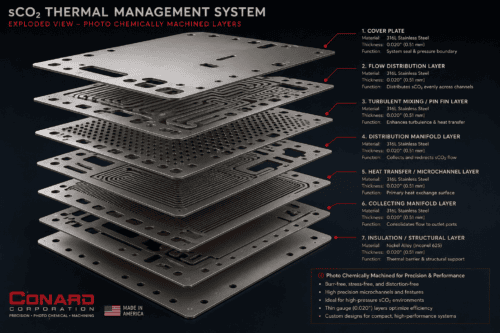
  9. Complex sCO2 Stirling Engine Designs Enabled by Photo Chemical Machining

    Comments Off on Complex sCO2 Stirling Engine Designs Enabled by Photo Chemical Machining

    The Benefits of Photo Etching for Super-Critical CO₂ Stirling Engine Designs

    As the demand for high-efficiency, sustainable energy systems grows, super-critical carbon dioxide (sCO₂) Stirling engines are emerging as a promising solution for clean power generation. These engines leverage the thermodynamic advantages of sCO₂ to achieve compact, efficient, and high-performance operation. However, the success of these advanced engines depends heavily on the precision and reliability of their internal components—many of which require complex geometries and must operate in high-pressure, high-temperature environments. Photo etching, also known as chemical etching, offers a suite of benefits uniquely suited to meeting these challenges.

    Precision Engineering for Thermodynamic Efficiency

    sCO₂ Stirling engines operate under extreme conditions to maximize energy extraction from a given heat source. This requires components like heat exchangers, regenerator plates, flow channels, and seals to be manufactured with exacting precision. Photo etching excels in producing highly detailed tight tolerance metal parts. Fine features such as microchannels, fins, and flow passages can be manufactured in complex patterns that optimize heat transfer and fluid dynamics—critical for the high efficiency expected from sCO₂ cycles.

    Unlike mechanical methods such as stamping or CNC machining, photo etching is a subtractive, mask-based process that allows for extremely fine resolution without the risk of part distortion or mechanical stress. This is particularly important in regenerator matrices and microchannel heat exchangers, where maintaining precise geometries directly impacts system performance.

    Stress-Free and High-Integrity Parts

    In high-pressure Stirling engine applications, mechanical integrity is paramount. Components must maintain their shape and function under severe thermal and pressure stresses. Photo etching is a non-contact, room-temperature process, meaning no heat or force is applied to the metal during fabrication. As a result, the parts produced are completely stress-free, with no work hardening or microfractures that could compromise durability.

    This characteristic is especially valuable for thin metal foils and multi-layered assemblies used in regenerators or compact heat exchangers. The ability to create flat, burr-free, and deformation-free parts ensures reliable sealing, optimal thermal conduction, and structural consistency—key requirements in high-performance Stirling engine environments.

    Enabling Compact, Multi-Layer Designs

    One of the unique benefits of photo etching is its compatibility with stacked or laminated metal structures. In sCO₂ Stirling engines, compactness is often a design priority, and multi-layer heat exchangers or flow structures are common. Photo-etched plates can be designed with precise alignment features, bonding points, and complex internal geometries that allow them to be easily stacked into three-dimensional assemblies.

    This opens up innovative design possibilities—such as regenerative matrices with optimized porosity, or heat exchangers with finely tuned thermal paths—without the need for costly or complex manufacturing techniques. Engineers can iterate quickly on prototypes or scale up to production volumes without changing tooling, since photo etching uses photomasks and digital designs instead of dies.

    Material Versatility for Demanding Conditions

    sCO₂ systems operate at temperatures and pressures that require corrosion-resistant and heat-tolerant materials such as stainless steel, Inconel, and other alloys. Photo etching is compatible with these materials, allowing for the production of durable parts that maintain their performance over extended periods in challenging conditions.

    The process can also accommodate thin-gauge metals while maintaining high dimensional accuracy, making it suitable for lightweight, compact components that must endure both thermal cycling and corrosive sCO₂ environments. With material properties left untouched by the etching process, the integrity of advanced alloys is fully preserved.

    Cost Efficiency and Design Flexibility

    For developers of cutting-edge sCO₂ Stirling engines, photo etching provides both affordability and flexibility. Since no hard tooling is required, design modifications can be implemented quickly and without major cost implications. This is ideal for R&D environments, where rapid iteration and performance testing are crucial.

    Even at scale, photo etching remains cost-effective—particularly for high-precision, thin metal components that would be prohibitively expensive or difficult to machine. The process produces minimal waste and does not require secondary finishing, further reducing overall production costs.

    Conclusion

    Super-critical CO₂ Stirling engines represent a next-generation solution for efficient, sustainable power generation. Their success hinges on precision, durability, and compact design—all areas where photo etching excels. By enabling the fabrication of intricate, high-performance components with speed, accuracy, and material integrity, photo etching plays a vital role in advancing sCO₂ engine technology and unlocking its full potential in a carbon-conscious energy landscape.

    For More Information:

    Contact Page Form

    "*" indicates required fields

    This field is for validation purposes and should be left unchanged.
    Max. file size: 8 MB.
    This field is hidden when viewing the form


  10. The Benefits of Photo Etching for EV Battery Applications

    Comments Off on The Benefits of Photo Etching for EV Battery Applications

    EV battery designs in a variety of alloys

    Key Aspects of Using PCM For EV Battery Elements

    As the global transition to electric vehicles (EVs) accelerates, the demand for innovative manufacturing techniques that enhance efficiency, performance, and sustainability is rapidly increasing. One such technology gaining prominence in EV battery applications is photo etching, also known as chemical etching. This precise, cost-effective, and versatile process offers a range of advantages for the production of battery components, particularly in the context of battery current collectors, busbars, interconnects, and cooling plates.

    Unparalleled Precision for Complex Designs

    Photo etching enables the creation of intricate, high-resolution metal components with exceptional accuracy. Using photoresist and a controlled chemical etching process, manufacturers can produce parts with fine features and tight tolerances—down to just a few microns. This is particularly beneficial in EV batteries, where compact, lightweight, and intricately shaped metal parts are essential for maximizing energy density and minimizing space.

    For example, battery current collectors and busbars often feature intricate geometries that optimize electrical conductivity while minimizing weight. Photo etching allows for these complex patterns to be produced repeatably and without the need for expensive tooling, which is a significant advantage over traditional stamping or laser cutting.

    Material Integrity and Stress-Free Manufacturing

    Unlike mechanical methods such as stamping or punching, photo etching is a non-contact, non-thermal process. This means there is no mechanical deformation or heat-induced stress on the metal, preserving the integrity, flatness, and mechanical properties of the material. In EV batteries, where performance is closely tied to the structural reliability and consistency of components, this benefit is crucial.

    Stress-free components are particularly important for thin metal parts used in battery interconnects and foils. Maintaining flatness and surface uniformity ensures optimal contact between layers, improving thermal and electrical conductivity while reducing the risk of failure due to mechanical fatigue or distortion.

    Scalability and Design Flexibility

    One of the most appealing aspects of photo etching is its scalability and rapid prototyping capability. Because the process relies on digital artwork and phototools rather than hard tooling, design changes can be made quickly and at minimal cost. This is ideal for the fast-paced development cycles common in the EV industry, where battery technology is evolving rapidly, and manufacturers must continuously refine their designs to stay competitive.

    Whether for short production runs, pilot programs, or full-scale manufacturing, photo etching accommodates a wide range of production volumes without significant changes in cost structure. This makes it an attractive option for both established EV manufacturers and startups looking to innovate quickly and affordably.

    Compatibility with Advanced Materials

    EV batteries increasingly rely on advanced materials, including high-performance alloys and composite laminates, to achieve better thermal management, energy efficiency, and durability. Photo etching is compatible with a wide variety of metals, including copper, aluminum, stainless steel, and nickel—all commonly used in battery components.

    Furthermore, multi-layer metal parts or hybrid assemblies can be easily etched and stacked with consistent accuracy. This opens the door to creative engineering solutions for issues like heat dissipation, weight reduction, and improved energy transfer.

    Sustainability and Cost Efficiency

    In addition to performance benefits, photo etching offers environmental and economic advantages. The process generates minimal waste compared to mechanical machining or stamping, and unused metal sheets can often be recycled. Additionally, the lack of expensive tooling and the reduced need for secondary finishing steps (like deburring) translate to lower production costs and faster turnaround times.

    In a sector where efficiency and sustainability are key drivers, these attributes make photo etching a compelling choice for manufacturers seeking to align their production methods with eco-conscious and cost-effective goals.

    Conclusion

    As electric vehicles continue to shape the future of mobility, the technologies used to manufacture their batteries must keep pace. Photo etching stands out as a high-precision, flexible, and sustainable solution for producing critical EV battery components. Its ability to deliver intricate, reliable, and cost-efficient metal parts makes it an invaluable asset in the ongoing evolution of battery design and performance.

    For more information, contact us:

    Contact Page Form

    "*" indicates required fields

    This field is for validation purposes and should be left unchanged.
    Max. file size: 8 MB.
    This field is hidden when viewing the form